
Remember when we talked about turning Cursor into your digital command center? That was just the beginning. As AI tech continues to progress rapidly, it no longer just assists you; it works for you. Autonomously. In the background. While you sleep.
Welcome to the age of the AI workforce.
What makes async agents different
Traditional AI tools like ChatGPT or Claude require constant conversation. You ask, they respond, you ask again. It's reactive. Async agents are proactive. Give them a goal and they'll figure out how to achieve it, step by step, without you holding their hand.
Google's Jules, which entered public beta last month, exemplifies this perfectly. As Google describes it, Jules is "an asynchronous, agentic coding assistant that integrates directly with your existing repositories.” Swap the word “repositories” here with “computer files” and you start to get the picture.
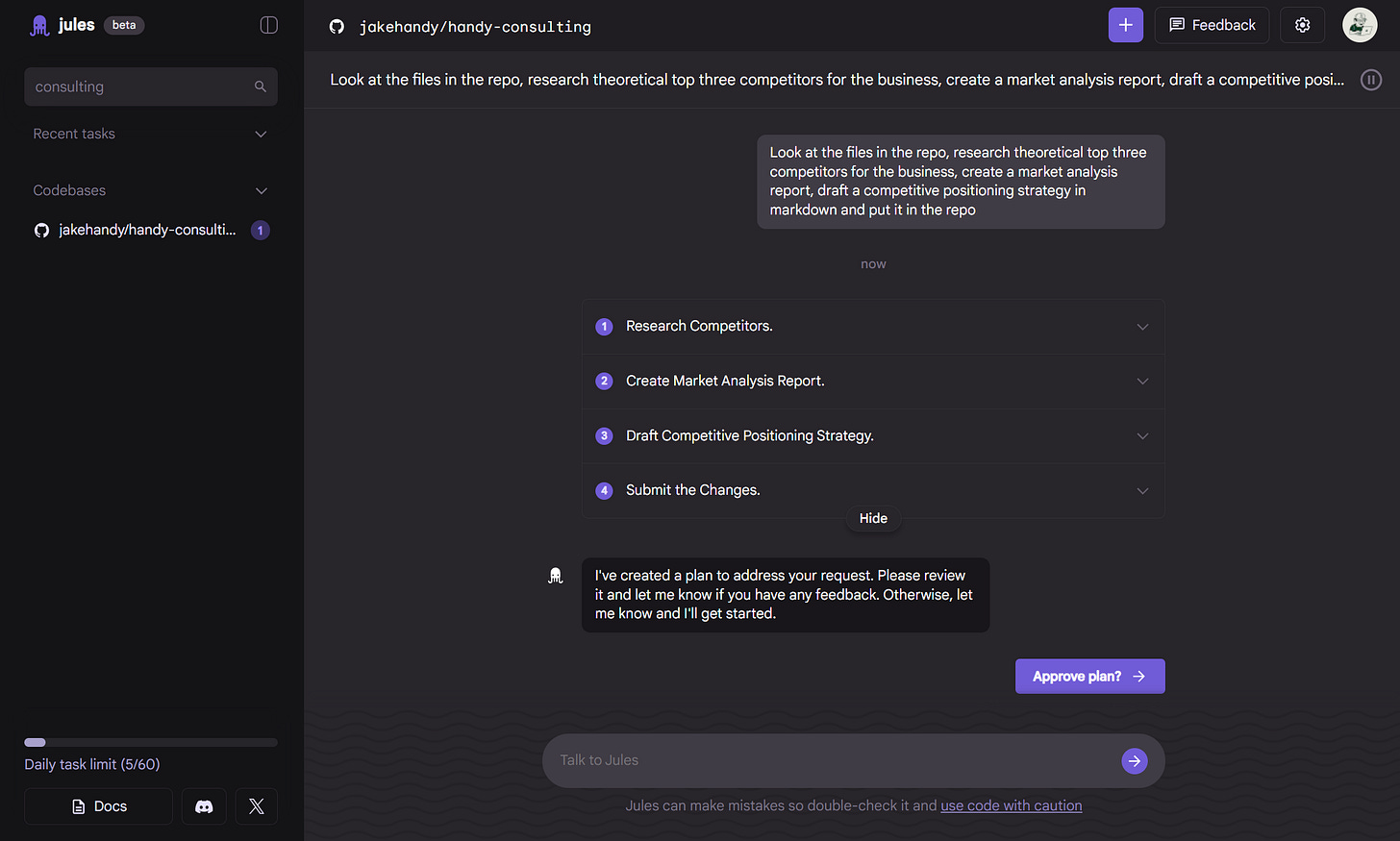
Imagine you're running a consulting business. Before bed, you tell Jules to "research our top three competitors, create a market analysis report, and draft a competitive positioning strategy." You wake up to a complete 20-page analysis sitting in your Cursor workspace, with all sources cited and recommendations ready for your morning client call.
This isn’t science fiction, it’s Tuesday.
The big three
In the past few months, three platforms have emerged as the leaders in async AI agent technology. Each has its own strengths (and weaknesses), and understanding which to use when is important.
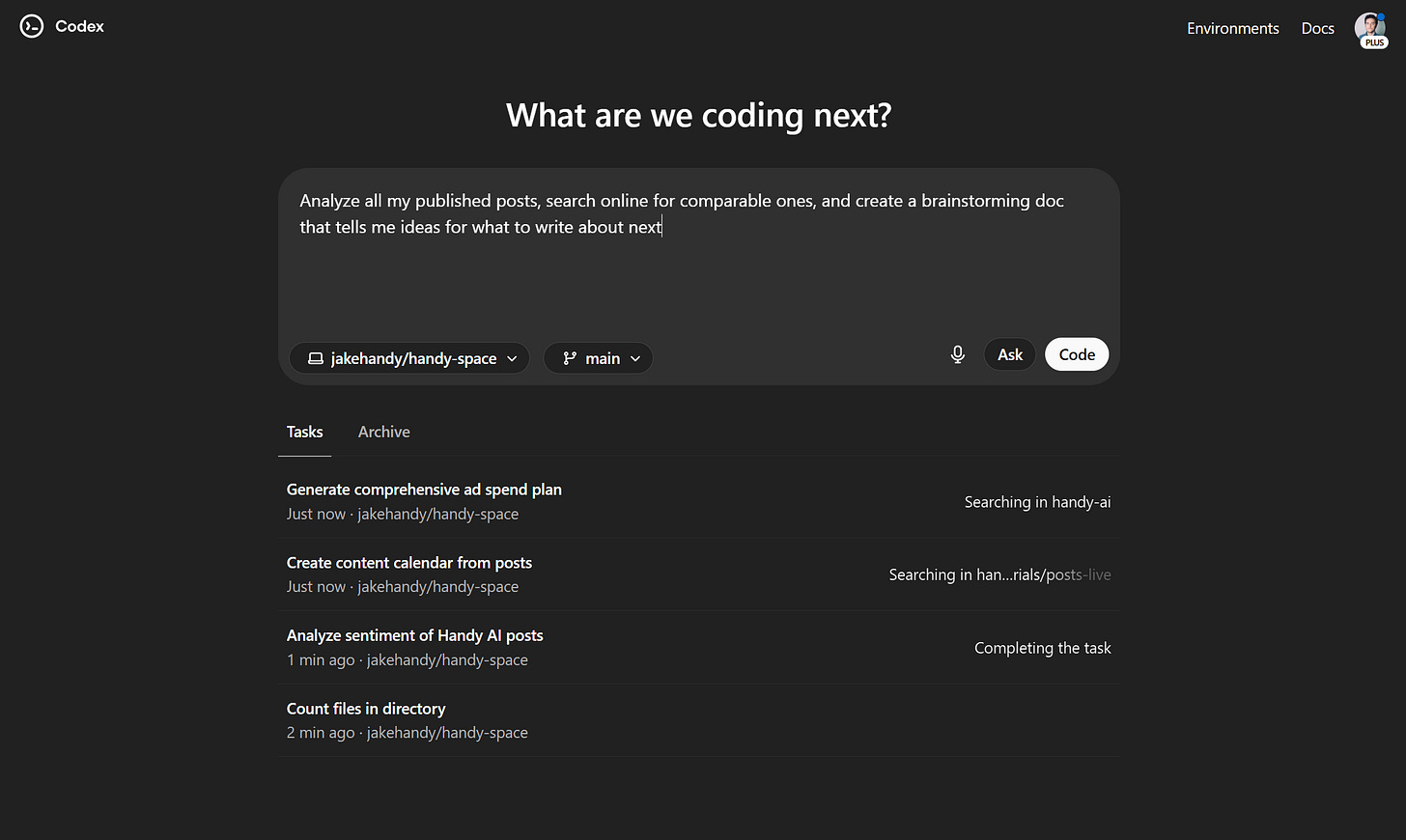
OpenAI’s Codex: The production powerhouse
OpenAI's Codex, launched last month, is the current gold standard of production-ready AI agents. Built on the specialized codex-1 model (a fine-tuned version of OpenAI's o3), Codex achieved 75% accuracy in coding tests.
What makes Codex different:
- Enterprise-grade integration. Seamlessly built into ChatGPT (for Plus and Pro users), with robust enterprise and team plans
- Isolated sandbox environment. Operates in a secure, air-gapped virtual machine with opt-in internet access for maximum security
- Multi-task parallel processing. Can handle multiple complex projects simultaneously in separate virtual environments
- Production reliability. Designed for mission-critical business applications with comprehensive error handling
Perfect for:
- The solo builder using ChatGPT for all their current needs
- Businesses needing reliable, consistent output
- Teams requiring enterprise-grade security and compliance
- High-volume processing tasks that need parallel execution
If you’re looking to prioritize security, opting out of internet access limits Codex's ability to find external documentation or APIs during execution, limiting some real-time research capabilities. But for folks that need dependable, production-ready automation, it's the clear choice.
Google’s Jules: The experimental innovator
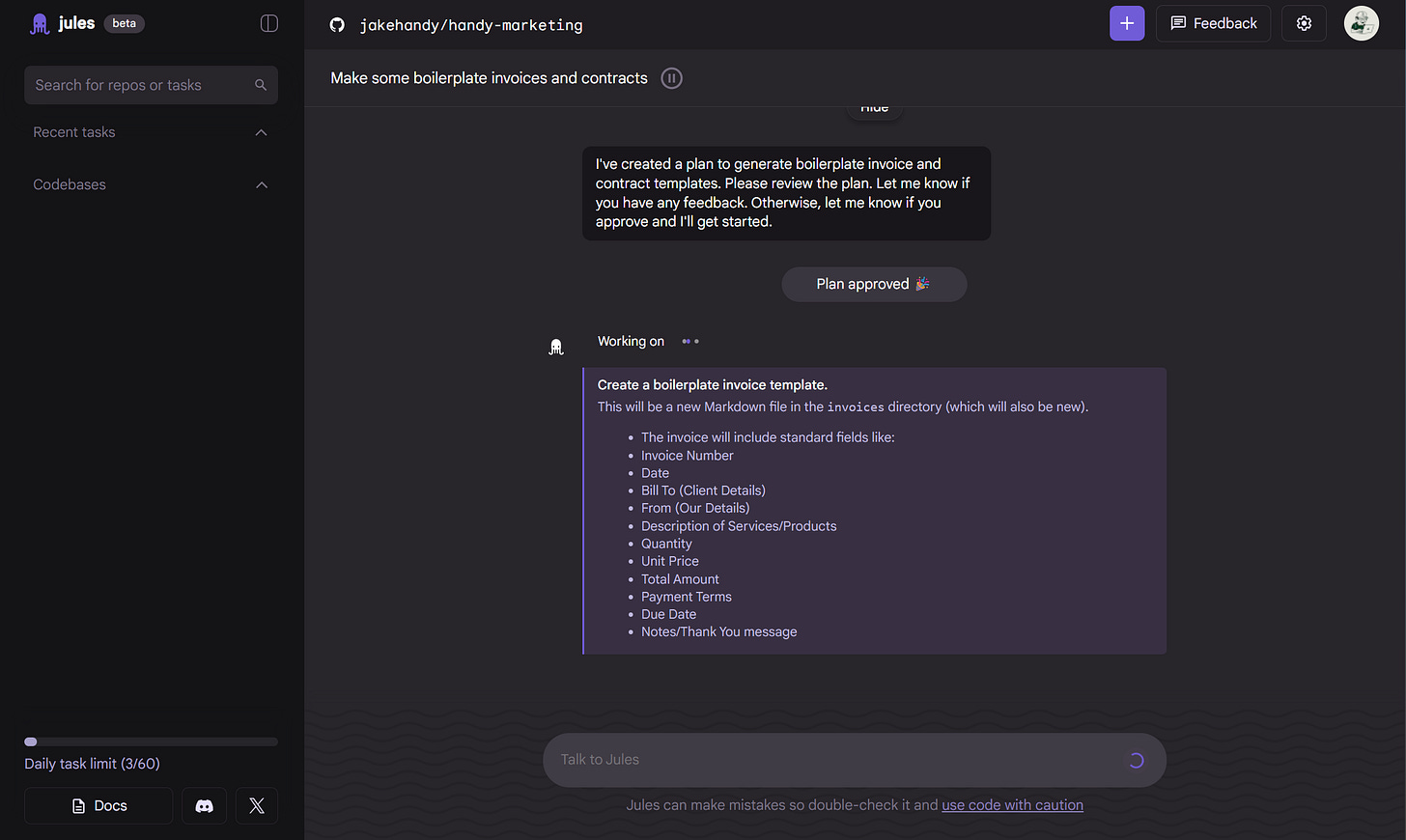
Jules is Google’s Codex. Built on Gemini 2.5 Pro and currently in public beta, Jules is being run as an experimental test (with free access!). While it lacks Codex’s enterprise polish, it’s abilities are nearly on par.
What makes Jules unique:
- Free public beta. Available to everyone worldwide, no subscription required during beta phase
- Internet connectivity. Jules can access external documentation and APIs in real-time
- Audio summaries. Unique feature that creates spoken summaries of completed work (dubbed “Codecasts”)
- Transparent planning. Shows its reasoning process step-by-step before execution
- Prototype flexibility. More experimental features and (likely) rapid iteration cycles
Perfect for:
- Solo builders and small teams experimenting with AI workflows
- Users who want cutting-edge features without financial commitment
- Teams comfortable with beta software and occasional limitations
As one detailed review noted: "After testing it thoroughly... apart from a few basic tasks, we couldn't find any relevant use cases for a real project." Jules is innovative but still finding its footing as a production tool.
Claude Code: The strategic consultant (Advanced tier)
Anthropic's Claude Code is here as our premium tier of async agents, with a steeper learning curve in its current CLI-only iteration. Industry analysis points out that Claude Code's "constitutional AI approach means it creates detailed plans before executing, allowing you to review and approve complex operations before they begin."
Perfect for:
- High-stakes projects requiring deep reasoning
- Complex strategy development
- Situations requiring ethical consideration
- An agent your dev team may better appreciate
- When you need the AI to "think" before acting
Claude Code strategizes, considers implications, and presents you with thoughtful recommendations. When you're making decisions that could impact your business significantly, Claude Code's more deliberative approach could be the better path.