
With OpenAI's release of GPT-4o's enhanced image generation capabilities this week, we're witnessing what might be the beginning of the end for entire categories of visual creative work. Unlike most AI image generators that produce clearly artificial results with innumerous telltale distortions, this update represents a fairly large leap in quality and usability that threatens to upend creative industries almost overnight.
The new paradigm
OpenAI's latest update to ChatGPT has transformed it from a powerful text assistant to a comprehensive creative suite. While GPT-4o's image generation abilities were initially announced back in May 2024, the company mysteriously held back this feature for nearly ten months. They finally activated these native image generation powers this week, quietly replacing DALL-E 3 with the more integrated and powerful GPT-4o image generation. This release came shortly after Google had launched similar capabilities with their Gemini 2 Flash Experimental model, suggesting a competitive response from OpenAI.
What makes this iteration different from the previous DALL-E? Three critical advances:
- Photorealistic rendering that eliminates the uncanny "AI sheen" of previous generators
- Text handling that produces accurate, readable typography (a notorious challenge for previous models)
- Precision and consistency in following detailed prompts, maintaining characteristics across multiple generations and allowing for precise edits to provided (or generated) images
The integration directly into ChatGPT means this technology isn't siloed away in a specialized tool. It's available in the same interface millions use daily for writing, coding, and general assistance. This frictionless access dramatically lowers the barrier to entry, putting professional-grade image creation in the hands of anyone with an internet connection.
The jobs most at risk
The range of creative work at risk is immense, spanning from commercial applications to hobbyist domains that were previously thought safe from automation.
Product mockups
One of the first to fall will be product visualization. The new model excels at generating both digital interfaces and physical product renderings with extraordinary precision. Companies that previously hired specialized design firms can now produce endless variations of packaging concepts, website layouts, and product visualizations at virtually no cost.
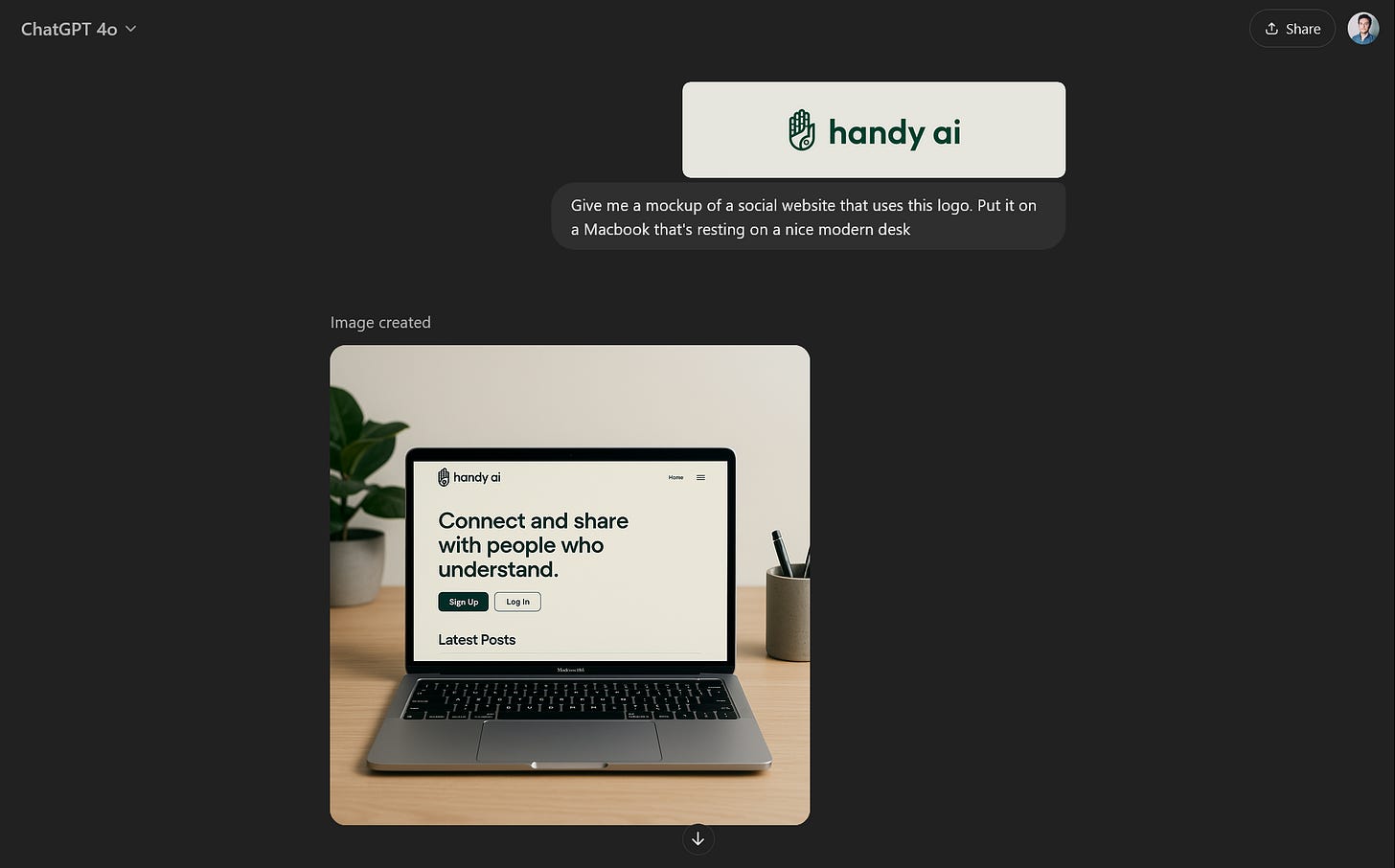
Marketing departments will drastically reduce dependence on dedicated designers, opting instead to rapidly iterate through hundreds of AI-generated options before selecting finalists. The ability to specify exact dimensions, color schemes, and styles means brands can maintain perfect consistency while exploring creative directions at unprecedented speed.
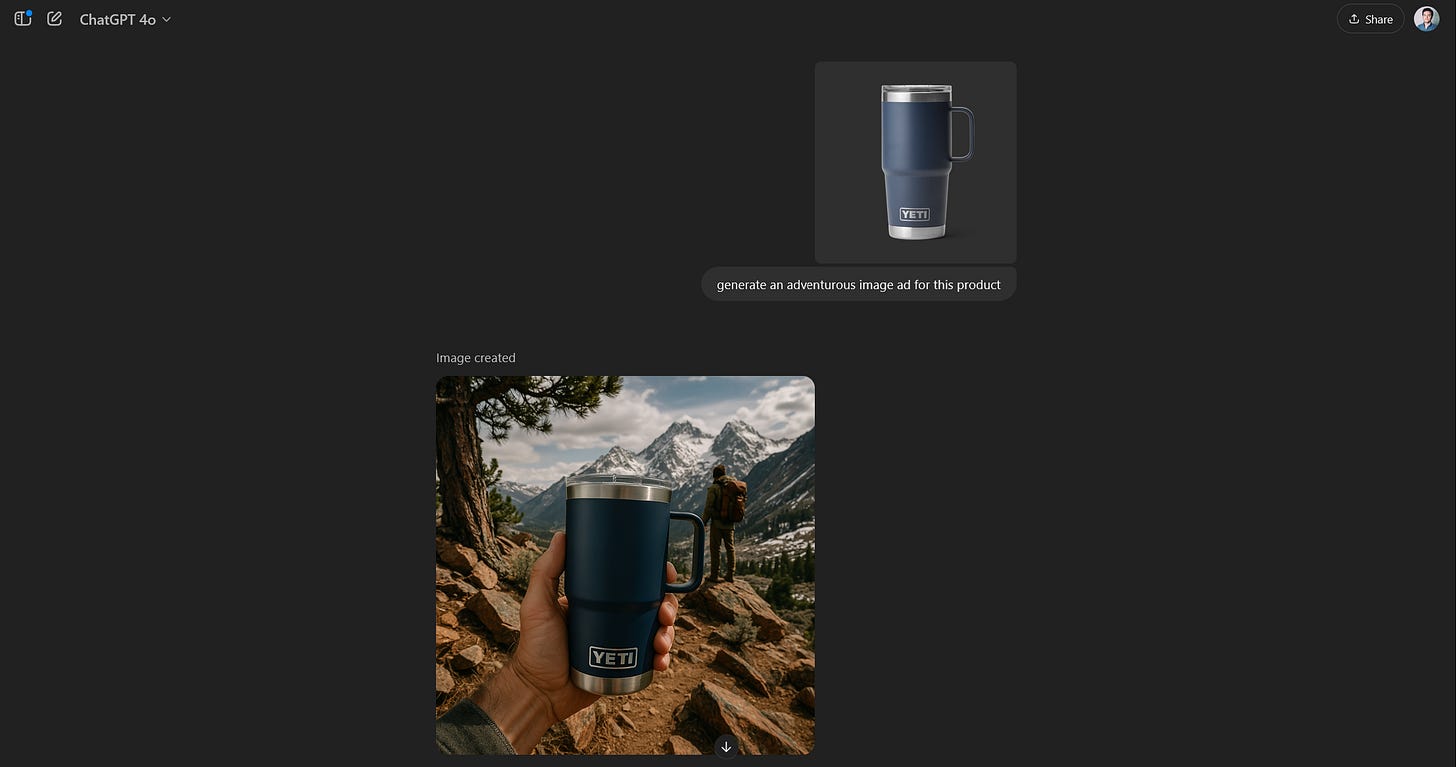
According to a 2024 Figma survey of nearly 1,800 designers, 59% of designers and developers are already using AI in their work, with many now handling tasks that previously required specialized design services. Industry forums report that companies are increasingly slashing budgets for visualization work (even prior to GPT-4o's image generation capabilities being released).
Image edits (the end of Photoshop specialists)
Perhaps most destructive to existing human work is GPT-4o's ability to seamlessly edit existing images. The model can now:
- Remove or replace backgrounds with perfect edge detection
- Alter lighting conditions across complex scenes
- Change colors, textures, and materials while preserving shadows and reflections
- Extend images beyond their original boundaries with contextually appropriate content
- Swap objects or people while maintaining consistent style