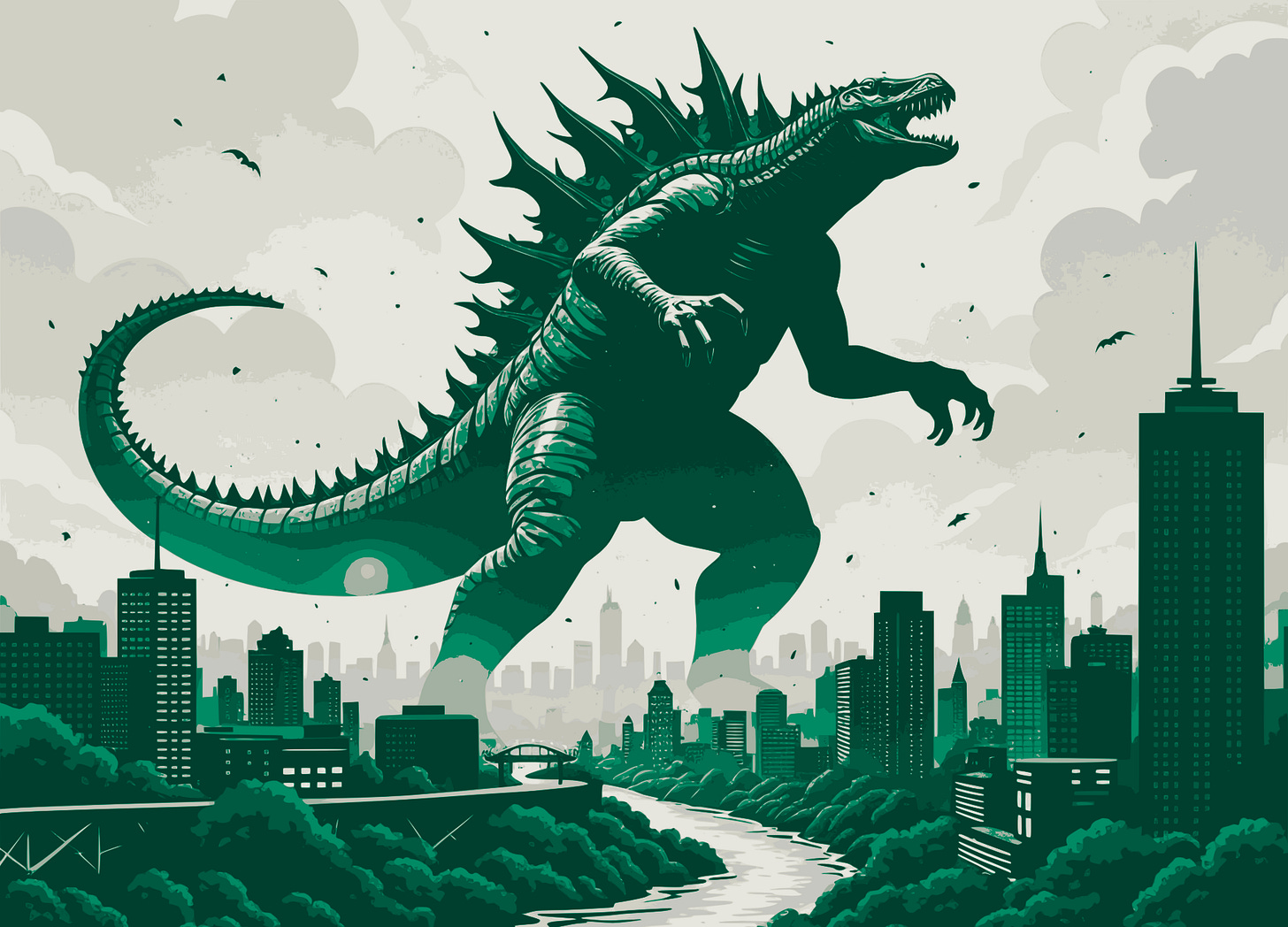
The term “kaijū” first appeared in ancient Japanese legends, representing various monster and creatures. This term eventually was adopted for giant monster films starting in the early twentieth century, and now is a textbook term for gigantic city-destroying monsters like Godzilla and Mothra.
The mythology around kaijus in film often features heavy debate and discussion about the morality of these massive creatures and, subsequently, their creators. Sound familiar? Within the world of large-language models (LLMs), the debate on whether these huge beasts can be created in a manner that is ethically responsible similarly rages on.
OpenAI and Anthropic, two major players in the LLM space, take different approaches to this challenge (frequently called AI alignment). Looking at these rival models as two warring kaiju is not only a fun way to analyze their differences in strategy, but also a convenient metaphor on the reality that these companies are facing. How can LLM creators ensure their digital beasts battle ethically?
What is AI alignment?
When kaiju first emerged from the depths, their motives were unknown - would they attack cities or live peacefully? AI alignment seeks to ensure these digital leviathans act benevolent, rather than destructive. It involves developing techniques to imbue AI systems with goals and values aligned with their human creators; AI alignment research aims to instill ethics and care for human well-being, rather than unchecked power. The goal is to cultivate gigantic yet gentle beasts, who use their strength to protect rather than destroy civilization. Alignment transforms foes into friends, ideally commanding our kaiju to battle for good.