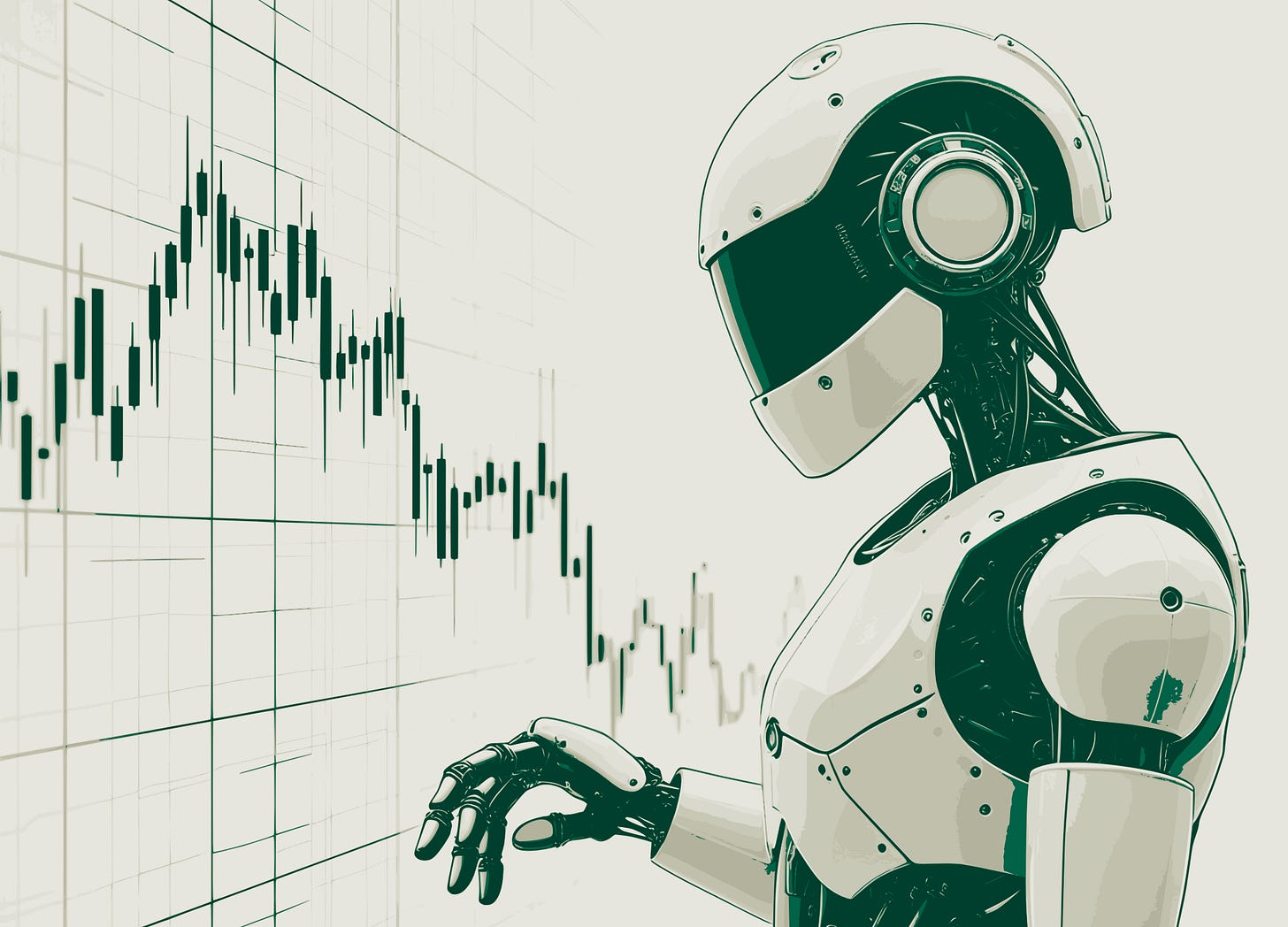
Global financial markets are experiencing a sharp selloff, with major indices plummeting and investors fleeing to safe-haven assets. While economic data and recession fears are the proximate causes, artificial intelligence may be playing a significant behind-the-scenes role in amplifying and accelerating market moves. This analysis examines how AI and algorithmic trading could be exacerbating volatility and potentially destabilizing markets during this turbulent period.
Today’s market
On Monday this week, U.S. stock indices suffered steep declines, with the Dow Jones Industrial Average dropping over 1,000 points and the Nasdaq Composite falling nearly 4%. Global markets saw even sharper losses, with Japan's Nikkei 225 index crashing 12.4% - its worst single-day loss since the 1987 "Black Monday" crash.

Some predict the selloff was triggered by disappointing U.S. economic data, particularly a weaker-than-expected July jobs report. This has stoked fears of an impending recession and concerns that the Federal Reserve has kept interest rates too high for too long. However, the severity and speed of the market reaction suggests other factors may be at play beyond just economic fundamentals.
AI risks fueling the downturn
AI-powered algorithmic trading
A potential key suspect in amplifying market volatility is the widespread adoption of AI-driven algorithmic trading strategies. These systems use machine learning and other AI techniques to analyze vast quantities of data and execute trades at superhuman speeds. While proponents argue they enhance market efficiency, critics warn they can also magnify instability during periods of market stress.
According to industry estimates, algorithmic trading now accounts for 60-75% of U.S. stock market volume. This means a significant portion of trading activity is being driven by automated systems rather than human decision-makers. During volatile periods, these algorithms can potentially create feedback loops that exacerbate price swings.
As one analyst noted, "In our assessment a lot of this (market sell-off) has been down to position capitulation as a number of macro funds have been caught the wrong way around on a trade, and stops have been triggered". In other words, automated stop-loss orders and position unwinding by AI trading systems may be accelerating the pace of selling.
Herding behavior and systemic risk
One particular concern with AI trading algorithms is their potential to engage in "herding" behavior - making similar decisions based on the same models and data inputs. This can amplify market movements and potentially create systemic risks.
During periods of market stress, if multiple major trading firms are using similar AI models, they may all simultaneously decide to reduce risk exposure and sell off assets. This coordinated algorithmic selling can create a cascading effect, driving prices down further and triggering additional sell orders.
The Bank of England has specifically warned about this risk, with Governor Andrew Bailey stating: "All of us who have used it have had the experience of a sort of hallucination, and it sort of comes up with something that you think: 'How on Earth did that come out?' If you're going to use it for the real world and financial services, you can't have that sort of thing happening" [Source: "Global market rout has more to do with end of cheap funding than US economy"].
Complexity and opacity
Another factor that may be contributing to market instability is the increasing complexity and opacity of AI trading systems. As algorithms become more sophisticated, it becomes harder for human operators and regulators to understand exactly how they work and predict how they will behave in various scenarios.